
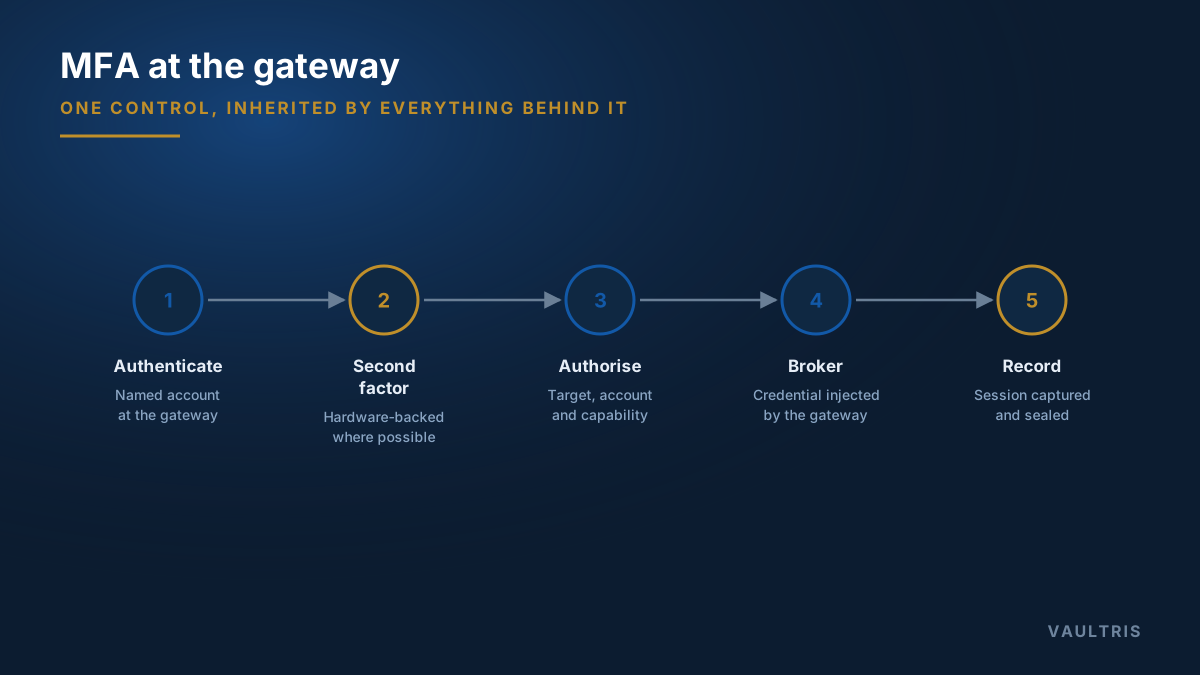
Why the gateway is the right place
Deploying MFA across hundreds of servers individually is a multi-year programme that usually stalls. Deploying it at the one host every administrative session must cross is a single change that covers all of them — provided the targets genuinely refuse connections from anywhere else.
That is the leverage of the chokepoint: one control, applied once, inherited by everything behind it.
Choosing factors
| Factor | Phishing resistant | Works offline | Notes |
|---|---|---|---|
| FIDO2 / WebAuthn | Yes | Yes | Strongest practical option; origin-bound so it cannot be relayed |
| PIV / CAC smart card | Yes | Yes | Standard in government and defense; needs PKI already in place |
| TOTP app | No | Yes | Good baseline; a convincing proxy page can capture and replay a code |
| Push notification | No | No | Vulnerable to fatigue attacks; requires number matching to be safe |
| SMS | No | No | SIM swap and SS7 interception; avoid for privileged access |
For a gateway that fronts high-consequence systems, hardware-backed factors are worth the procurement effort. They also remove a dependency: a token validated locally keeps working when the internet does not, which matters during exactly the incidents you care about. See high availability.
The exception group problem
Nearly every stalled MFA rollout has the same shape. Enforcement is turned on, three cases genuinely cannot comply, an exception group is created for them, and eighteen months later that group has forty members and nobody remembers why most of them are in it.
Automation without a bypass
The legitimate objection is automation: pipelines and scheduled jobs cannot present a second factor. The answer is not to exempt them from MFA but to remove them from the interactive path entirely.
- Give machine identities their own credentials, scoped to exactly the target and action required
- Bind them to source address, so a stolen key is useless from elsewhere
- Prefer short-lived, issued credentials over long-lived static keys
- Never let a human borrow a service credential to skip the prompt — that is the bypass, wearing a costume
Enrolment and recovery are the attack surface
Strong authentication is only as strong as the process for issuing and replacing it. If a help desk agent can reset a factor after a phone call, the factor is worth what that call costs an attacker.
- Verify identity out of band before enrolment, ideally in person for privileged roles
- Require two factors to register a new one where possible
- Log every enrolment and reset as a privileged event, reviewed like any other
- Issue backup tokens rather than printable recovery codes that end up in a drawer
Do not stop at the front door
MFA proves who opened the session. It says nothing about what happens during it. Pair it with session recording, expiring authorisation, and approval on the targets that warrant it — the gateway’s value comes from the combination, not from any single control.