
The short answer
Most engineers use jump server, jump host, jump box, and bastion host interchangeably, and no one will misunderstand you. If you need a working distinction, this is the useful one:
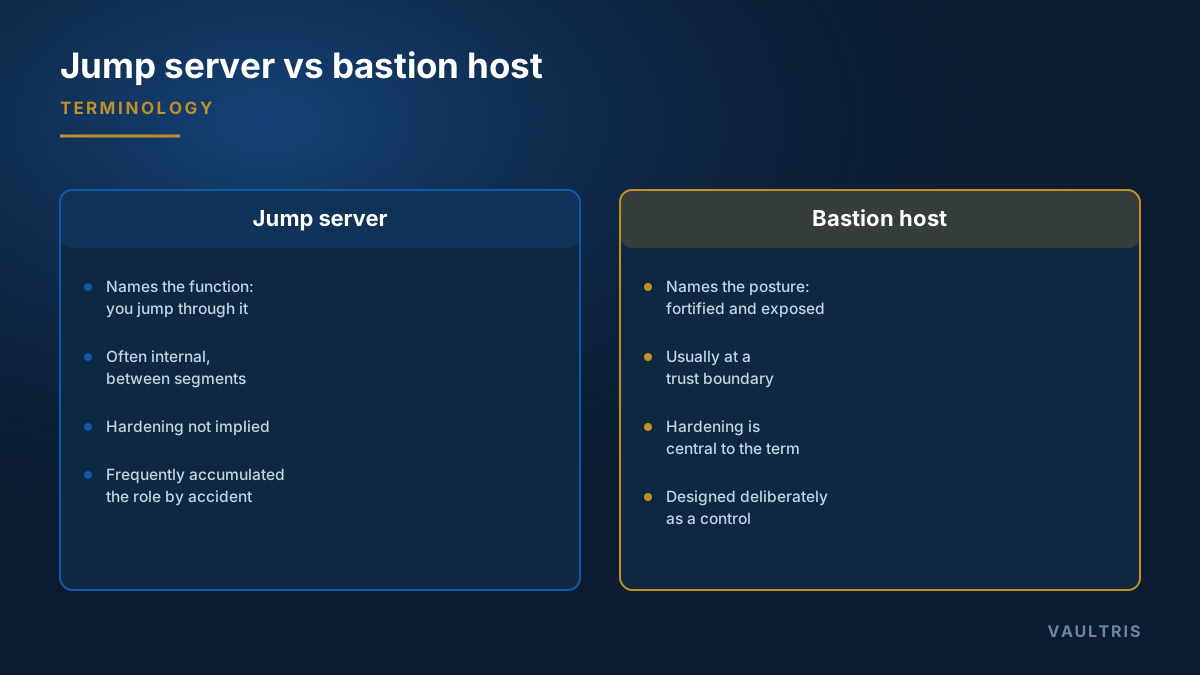
| Jump server | Bastion host | |
|---|---|---|
| Emphasis | Function — you jump through it to reach something else | Posture — it is hardened and exposed on purpose |
| Implied placement | Often internal, between network segments | Usually at the perimeter, facing an untrusted network |
| Implied hardening | Not necessarily; a jump box may be an ordinary server | Central to the term — a bastion is fortified by definition |
| Typical origin | Grew organically from an admin box someone kept using | Designed deliberately as a control |
Where the words come from
"Bastion" is borrowed from fortification: a projecting section of a defensive wall, positioned to be exposed and built to withstand it. The term entered network security through Marcus Ranum's firewall work, describing a host deliberately placed where attacks land and hardened to survive that position.
"Jump server" is descriptive rather than metaphorical. It names what an administrator does: connect here, then jump onward. The word says nothing about how well the host is defended.
Why the accidental version is dangerous
A large share of the jump hosts found during assessment were never designed. Someone needed a machine that could reach production, an existing server could, and the practice stuck. Three years later that host has:
- Accounts for people who left, because nothing triggers removal
- Other applications running on it, each adding attack surface to the one host that must not fall
- Its own inbound access from more places than anyone intended
- No session recording, because it was never conceived as an audit point
A host in that condition is worse than no jump server. It concentrates access without concentrating control, and it gives everyone the reassuring impression that privileged access is managed.
What both terms leave out
Neither word implies anything about credential handling, session recording, approval workflow, or expiry. A perfectly hardened bastion host can still hand administrators a shared root password and keep no record of what they did with it.
That is why the vocabulary shifted again. A privileged access gateway — the category Vaultris sits in — describes a bastion that also brokers the credential, records the session, and expires the access. The architecture is the same chokepoint; what changed is how much control lives at it. How the jump box became a platform traces that progression.
Which term to use
Use whichever your organisation already uses — consistency is worth more than precision here. If you are writing a design document or a control description for an auditor, "bastion host" is the safer choice: it appears in security literature and framework guidance, and it carries the hardening expectation you want documented.