Purpose-built for military & law enforcement
One hardened gateway. Everything else stays dark.
Privileged access security engineered for military commands and law enforcement agencies. Every session authenticated, brokered, and recorded — on-premises, in a sovereign region, or fully air-gapped.
It all starts with the platform.
Vaultris is a bastion host and privileged access security platform. It brokers administrative connections to servers, desktops, databases, Kubernetes clusters, web consoles and network devices: the gateway verifies the operator, checks the authorization, injects the stored credential without ever revealing it, records the session, and expires the access on a clock. Nothing reaches a protected system directly.
The Vaultris Console
Conquer complexity. Command control.
Run the whole estate from one console, in four workspaces: My Access for operators, Admin for the estate and its policies, Vault for the credential store, and Audit for the record.
- Privilege exposure at a glance — how many stored credentials hold full admin, and which assets they reach.
- Live posture, not a report — session volume, evidence integrity, and coverage recomputed on every load.

The Control Layer
Every privileged session, brokered and recorded.
One governed path into the environments that matter most — instead of dozens of unwatched ones.
Session recording
Replay any privileged session like video. Search commands across months of activity when a question is asked.
Credential vault
Production passwords are vaulted, rotated, and injected at connection time. Operators never see one.
MFA at the gateway
PIV/CAC, FIDO2, and TOTP enforced at the single entry point — before anything downstream is reachable.
Session Assurance
When someone asks who did what, you answer in minutes.
Every connection through the gateway is tied to a named individual and captured end to end. There is no such thing as an anonymous administrative session.
- Named attribution — shared accounts are eliminated at the broker, not by policy memo.
- Full capture — keystrokes, commands, and screen output, searchable across months.
- Sealed evidence — every recording closes with a SHA-256 digest in a hash-chained ledger; altering one breaks the chain visibly.

Controlled Access
Access that expires, credentials nobody holds.
Standing administrative access is how small compromises become large ones. Vaultris grants access per task, per window — and takes it back automatically.
- Just-in-time grants — access exists for the change window, then removes itself.
- Declared intent — every request states its reason, and the reason sets the clock: emergency access lives 30 minutes, not indefinitely.
- Granular approvals — the approver ticks exactly what a session may do (upload, download, clipboard); anything unticked stays refused.
- Vendor & third-party paths — outside hands get the same brokered, recorded route as staff.

Credential Vault
Every credential vaulted. Every exposure visible.
The vault holds the secrets the gateway injects at connection time — and watches its own records for trouble. Secrets are write-only: no path returns one, not even to an administrator.
- Privilege exposure — every credential that signs in with full admin is counted, named, and flagged.
- Coverage — assets with no vaulted credential are surfaced before they become an outage or a workaround.
- Risk detection — stale privileged secrets, missing secrets, dormant credentials, and widely granted ones, ranked high to low.

Traffic Architecture
Nothing reaches the network directly.
- Authenticate
- Authorise
- Broker
- Record
Direct connections from the internet are refused. Internal hosts accept traffic only from the gateway's private address.
Who We Serve
Six environments. One access plane.
Vaultris is built for the military and law enforcement mission — classified enclaves, CJIS-regulated systems, dispatch floors, and the agencies and contractors that support them. It is not a general-purpose IT product adapted after the fact.

Military & Defense
Enclave boundaries, coalition access, and air-gapped environments under one access discipline.

Police & Law Enforcement
CJIS-aligned access to CAD/RMS and digital evidence systems, with every touch attributable.
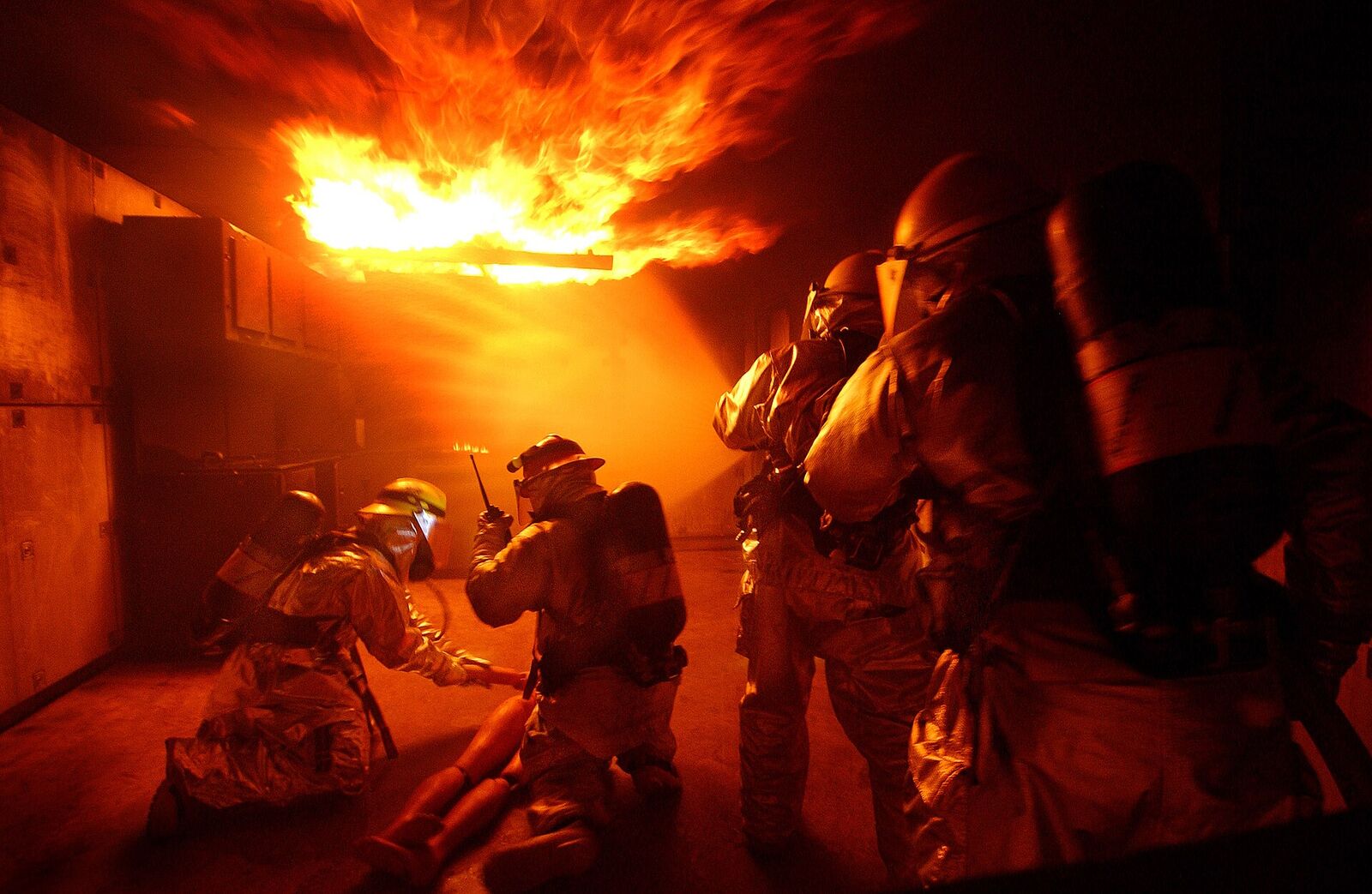
Fire & Emergency Services
Dispatch, station alerting, and mutual-aid systems kept reachable to exactly the right hands.
Emergency Management
Surge access for EOC activations that expires itself at stand-down — no cleanup pass needed.
Critical Infrastructure
A governed IT/OT boundary, with vendor maintenance access brokered instead of trusted.
Defense Industrial Base
Contractors, coalition partners, and agency MSPs held to the same brokered, recorded access as uniformed staff.
How We Engage
Assess. Architect. Deploy. Sustain.
Vaultris is the privileged access security practice of Virtual Enterprise Group LLC, working from Homestead, Florida with partner organisations across the United States, Canada, and the Caribbean. About the company →
Assess
Map every administrative route into your network — including the undocumented ones.
Architect
Gateway placement, high availability, and break-glass design for your topology.
Deploy
Build to a documented baseline. Migrate teams and systems in tranches.
Sustain
Patching, credential rotation, access review, and audit evidence on a cycle.
Continuous Verification
The baseline is checked by software, not by memory.
Hardening erodes quietly — a temporary exception here, a debug change there. Vaultris verifies the running configuration against the approved baseline continuously, and raises drift before an auditor or an adversary finds it.
PASS  sshd   PasswordAuthentication ... no
PASS  auth   MFA required ............. all users
PASS  auth   Shared accounts .......... 0 found
PASS  audit  Session recording ........ enabled
PASS  net    Direct ingress ........... refused
11 controls verified · 0 drift
Common Questions
What Vaultris is, and what it is not.
What is Vaultris used for?
Vaultris is used to control and evidence administrative access to production systems. Administrators, contractors, and vendors never connect to a target directly: every session is brokered by the gateway, which verifies the operator, injects the stored credential without revealing it, records what happens, and expires the access on a clock.
How is Vaultris different from a VPN?
A VPN grants broad, subnet-level network access once connected, so a compromised client sits inside the network and session recording requires additional tooling. Vaultris grants one brokered session to one named target, with no network-level access at all, and recording is native to the platform. Many organisations run both — they answer different questions. Full comparison, including zero trust →
How is Vaultris different from a traditional PAM product?
In Vaultris the vault, the access broker, and the session recorder are the same enforcement point, rather than a vault that hands a password to a client and hopes the session is logged elsewhere. Secrets are write-only: no path returns one, not even to an administrator. Vaultris is also explicit about its limits — rotating a vaulted secret replaces the value the gateway injects, it does not change the password on the target machine.
How does Vaultris record privileged sessions?
SSH sessions are captured as a full keystroke and output transcript with an indexed command list and risk scoring. RDP and VNC sessions are captured as screen replay. Web consoles are reached through a brokered browser on the gateway and filmed. Every recording is sealed with a SHA-256 digest at close, and that digest is written into an append-only, hash-chained ledger, so any later alteration is visible.
How does Vaultris handle credentials?
Credentials are held encrypted in the vault and injected into the session at connection time. The operator never sees, types, or learns the password — which means it cannot be reused, written down, or taken to another employer. The vault is write-only by design: it reports on credential hygiene from its own metadata, but no path reads a secret back.
Which protocols and systems does Vaultris support?
SSH, SFTP, SCP and Telnet for Linux and Unix; RDP, WinRM and SMB for Windows; VNC and X11; databases including MySQL, MariaDB, PostgreSQL, Oracle, SQL Server, MongoDB and Redis; Kubernetes exec, kubectl and container shells; switch, router, firewall and jump-mediated OT/SCADA consoles; and cloud or internal web admin panels through a brokered browser. Protocol coverage and audit depth →
Can Vaultris operate in an air-gapped environment?
Yes. Alongside on-premises, private cloud, and sovereign or regional deployment, Vaultris runs fully disconnected for classified and isolated enclaves, using offline update bundles and local evidence retention. Deployment models →
Who is Vaultris designed for?
Vaultris is built specifically for the military and law enforcement mission: defense commands and classified enclaves, police agencies running CJIS-regulated CAD, RMS and digital evidence systems, and the fire, EMS and emergency management services that operate alongside them. Critical infrastructure operators and defense contractors deploy it where they support those missions. It is not a general-purpose enterprise IT product. Sector detail →
Which compliance frameworks does Vaultris support?
Vaultris maps privileged access controls to CJIS, NIST SP 800-53, SOC 2, ISO 27001, PCI-DSS and HIPAA, and generates the evidence those frameworks ask for — entitlement registers, access review packs, session recordings, and baseline attestation. It does not, by itself, make an organisation compliant: certification depends on scope, process, and controls well beyond privileged access. Framework mapping and evidence →
Next Step
How many ways into your network don't you know about?
Most organisations are surprised by the answer. An access path assessment finds every route — then we help you close all but one.